By Best Baby Picks Daily • July 20, 2026 • Contains affiliate links
Affiliate Disclosure: As an Amazon Associate, we earn from qualifying purchases. Clicking our links costs you nothing extra and helps us keep reviewing products for free.
Setting up a newborn nursery can feel overwhelming when you're staring down endless product choices. The truth is, you don't need everything marketed to new parents—but you do need to get the core categories right: safe sleep furniture, efficient storage and changing areas, proper lighting, climate control, and monitoring equipment.
Check the weight and height limits on car seats and strollers before purchasing, since babies grow quickly and you'll need to replace them sooner than expected if you choose models with lower weight capacities. Comparing the actual usable lifespan of each item can save you money in the long run compared to buying based on price alone.
This guide cuts through the noise by comparing the actual products and approaches mentioned by nursery experts, showing you the real trade-offs between options so you can build a nursery that works for your space, budget, and parenting style.
Full-Size CPSC-Certified Crib + Firm Mattress
A standard full-size crib remains the gold standard for newborn sleep safety. These meet Consumer Product Safety Commission (CPSC) standards and accept firm, well-fitting mattresses designed specifically for crib dimensions. Pair it with a quality firm mattress (never use an adult mattress) and multiple fitted crib sheets in breathable cotton. A waterproof mattress protector extends the mattress life and simplifies cleanup after inevitable accidents.
This setup is non-negotiable for SIDS risk reduction and creates a contained, predictable sleep environment for your baby.
Best for: Parents prioritizing safety compliance and long-term durability; cribs can often be used for siblings or resold.
Dresser with Changing Pad Attachment
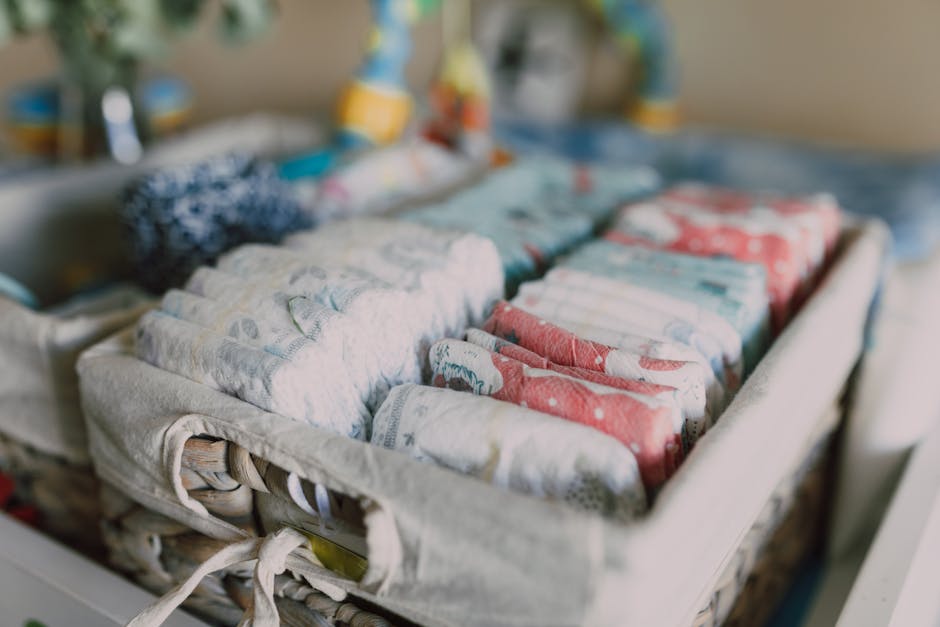
A dresser that doubles as a changing station is the most space-efficient approach to nursery organization. Place a changing pad with safety rails or edges on top, and you've created an ergonomic diaper-change surface at comfortable height—preventing back strain during those dozens of daily changes. The drawers below provide essential storage for clothes, diapers, wipes, and supplies.
This single piece of furniture combines two functions, making it ideal for smaller rooms or tight budgets. Keep diaper cream, wipes, and a small trash bin within arm's reach on the changing surface for efficiency during nighttime changes.
Best for: Families with limited nursery space or those wanting to minimize furniture; also cost-effective compared to separate changing tables.
Dedicated Changing Table
A standalone changing table provides dedicated diaper-change workspace without competing storage duties. Models with built-in shelving underneath or side organizers keep supplies instantly accessible. The height is fixed at an ergonomic level, and the changing surface is typically wider than a dresser top, giving you more maneuvering room.
The downside is that it occupies dedicated nursery square footage and serves only one function—once your child is potty-trained, it becomes unused furniture or storage. It's also an additional expense beyond a dresser that could serve multiple purposes.
Best for: Parents with spacious nurseries who prioritize ergonomic comfort during frequent diaper changes; those who plan to have multiple children and want reusable changing furniture.
Comfortable Chair or Glider for Feeding & Bonding
A quality feeding chair or glider is essential for nighttime feedings, soothing, and bonding—and it will get significant use during those first months. Look for options with durable upholstery, smooth rocking or swivel motion, and adequate armrests to support your arms during extended feeding sessions. An ottoman or footrest paired with the chair provides ergonomic support and makes those 2 a.m. feeds more comfortable.
This is one of the few nursery pieces you should prioritize comfort on, since you'll spend hours here. A worn-out or uncomfortable chair becomes a source of frustration during sleep-deprived nights.
Best for: All nursing and bottle-feeding parents; essential for creating a comfortable space for nighttime feeds and soothing routines.
White Noise Machine (e.g., Baby Shusher)
White noise machines like the Baby Shusher help mask household sounds and establish consistent sleep cues. They're particularly valuable in multi-child homes, apartments, or rooms near traffic. A quality white noise machine provides ambient sound that helps your baby sleep through interruptions and signals naptime through consistent audio cues.
Modern machines are compact, often have timer functions, and are more effective than leaving a fan running. The initial investment is modest (typically $20–$50), but the sleep benefit often justifies the cost—both for your baby's consistency and your sanity.
Best for: Urban apartments, multi-child households, or homes with external noise; parents aiming to establish predictable sleep schedules.
Humidifier + Temperature Control Setup
A humidifier prevents dry skin and congestion—especially critical in winter months or arid climates. Pair it with a room thermometer to maintain the recommended safe sleep temperature of 68–72°F. Some parents also use a simple fan for air circulation and temperature regulation. Together, these tools create an optimal sleep microclimate without overheating (a SIDS risk factor).
The humidifier requires regular maintenance (cleaning to prevent mold), but the respiratory benefits during cold months are real, especially for babies prone to congestion. Temperature monitoring is free if you already own a thermometer; it's one of the highest-ROI monitoring tools.
Best for: Parents in dry climates or cold regions; babies with sensitive skin or congestion; anyone aiming to optimize sleep conditions without medication.
Blackout Curtains
Blackout curtains are one of the most underrated nursery essentials. They block external light, signal naptime visually to your baby, and support melatonin production for better sleep consolidation. A quality blackout curtain can darken a room enough to maintain sleep during daytime naps and early morning light—critical for establishing healthy sleep patterns from birth.
Installation is simple (most hang on standard rods), and the cost is low relative to other nursery investments. They're also useful later for older children managing nap transitions.
Best for: Any parent establishing early sleep schedules; essential in rooms with heavy natural light or for daytime naps.
Baby Monitor (Audio + Video)
A baby monitor lets you check on your baby remotely during sleep, watch for safety issues, and monitor breathing patterns. Video monitors provide visual confirmation without entering the room; audio-only monitors are more affordable but require you to enter the nursery to assess issues. Modern monitors often include temperature displays, two-way talk, and nighttime vision.
While not strictly essential (co-sleeping parents or small homes might manage without), monitors provide peace of mind and enable parents to respond quickly to genuine issues versus false alarms from normal baby noises.
Best for: Parents who need remote monitoring for peace of mind; families in homes where the nursery is far from parents' bedroom.
Pros & Cons
Pros
✓ A dresser-based changing station saves space and money compared to separate furniture pieces.
✓ Blackout curtains are inexpensive ($20–$60) but dramatically improve sleep quality and schedule establishment.
✓ A quality feeding chair with footrest prevents back strain and creates a comfortable bonding space—you'll spend hours here, so it's worth the investment.
✓ White noise machines provide consistent sleep cues and are particularly valuable in noisy environments, with a modest initial cost.
✓ A firm CPSC-certified crib with fitted sheets and waterproof protection covers the non-negotiable safety requirement at a reasonable price point.
Cons
✗ Standalone changing tables are expensive and redundant—a dresser-top changing pad accomplishes the same goal with dual functionality.
✗ Humidifiers require regular maintenance and cleaning to prevent mold growth, adding an ongoing task to new-parent routines.
✗ Video baby monitors add cost and complexity; they're helpful but not essential if your home layout allows quick response times.
✗ Over-decorating or over-furnishing a nursery creates clutter that increases SIDS risk and makes cleaning harder during frequent accidents.
✗ Bedding sets marketed as 'complete' often include unsafe items like bumpers and blankets that pose suffocation risks for infants under 12 months.
Our Verdict
The most practical approach prioritizes dual-function furniture and evidence-based safety tools over decorative extras. Start with a CPSC-certified crib, firm mattress, fitted sheets, and waterproof protector as your non-negotiable base—this is where safety investments matter most. Pair this with a dresser-top changing pad (not a dedicated changing table, which wastes space) and wall-mounted shelving or closet organization for diapers and supplies. Add a quality glider or rocking chair with good armrests and an ottoman for comfort during nighttime feeds.
For climate and comfort, blackout curtains ($30–$60) deliver the highest ROI—they're inexpensive, easy to install, and measurably improve sleep quality. A room thermometer costs almost nothing and prevents overheating, a genuine SIDS risk factor. A humidifier makes sense if you live in a dry climate or experience winter congestion; a white noise machine (like the Baby Shusher) is worth the $25–$50 if you have external noise or multiple children.
A baby monitor (audio-only is sufficient for most homes; video adds cost without necessity) provides peace of mind but isn't essential if your bedroom is close to the nursery. Skip expensive decorative bedding, bumpers, pillows, and themed furniture—these don't improve outcomes and create clutter. The best nurseries are functional, minimal, and focused on safety and parental efficiency, not Instagram aesthetics.
Frequently Asked Questions
Do I really need a dedicated changing table, or will a dresser with a changing pad work?
A dresser with a changing pad is almost always the better choice. It provides dual functionality (storage + changing surface), takes up the same floor space, costs less, and serves a purpose after diaper changes are over. A dedicated changing table becomes unusable furniture once your child is potty-trained. The only exception is if you have significant nursery space and prioritize maximum comfort during frequent diaper changes—in that case, the extra surface area of a standalone table might be worth it.
What bedding is safe for a newborn crib?
Use only fitted sheets rated for your crib mattress, a waterproof mattress protector, and nothing else for babies under 12 months. Avoid bumpers, blankets, pillows, and crib liners—these increase SIDS risk. Some parents use lightweight blankets after 12 months, but many pediatricians recommend waiting until age 2. A safe crib should look stark and empty; comfort comes from proper room temperature, blackout curtains, and white noise—not soft objects.
Is a white noise machine worth the cost?
If you live in a quiet home with a dedicated, isolated nursery, a white noise machine is optional. If you have multiple children, live near traffic, or have a bedroom close to the nursery, it's highly worthwhile. At $25–$50, the cost is modest relative to other nursery investments, and the sleep benefit (both for your baby and your own sleep quality) often justifies it. The Baby Shusher is a popular option mentioned by experts, but any reliable white noise machine works.
Do I need a humidifier in my nursery?
A humidifier is essential if you live in a dry climate, experience harsh winters, or have a baby prone to congestion or dry skin. In humid climates, it's unnecessary and can promote mold growth if not maintained properly. If you do use one, clean it regularly according to the manufacturer's instructions. Many parents find they need a humidifier only during winter months, making it seasonally useful rather than a year-round necessity.
Should I invest in an expensive video baby monitor?
An audio-only monitor is sufficient for most families, especially if your bedroom is within one floor or a reasonable distance from the nursery. Video monitors add cost ($100–$300+) and complexity without dramatically improving outcomes. A basic audio monitor lets you hear your baby and respond quickly. Reserve video monitors for specific situations: very large homes, multiple floors with significant distance, or if you have specific anxiety about monitoring needs. Otherwise, the money is better spent on sleep-supporting essentials like blackout curtains and a quality glider.
What temperature should a nursery be for safe sleep?
Maintain a nursery temperature of 68–72°F (20–22°C) for optimal safe sleep. Overheating is a known SIDS risk factor. Use a simple, inexpensive room thermometer to monitor this. Dress your baby in age-appropriate sleepwear (sleep sacks are ideal for infants), and avoid excessive blankets or heating. A basic thermometer costs $5–$10 and is one of the highest-ROI safety investments you can make.
Our team evaluates baby products for safety, usability, and value so you don't have to. Every recommendation is based on real research: customer reviews, expert opinions, and value for money. Learn more about us →
This post contains affiliate links. We may earn a commission if you purchase through our links at no extra cost to you.