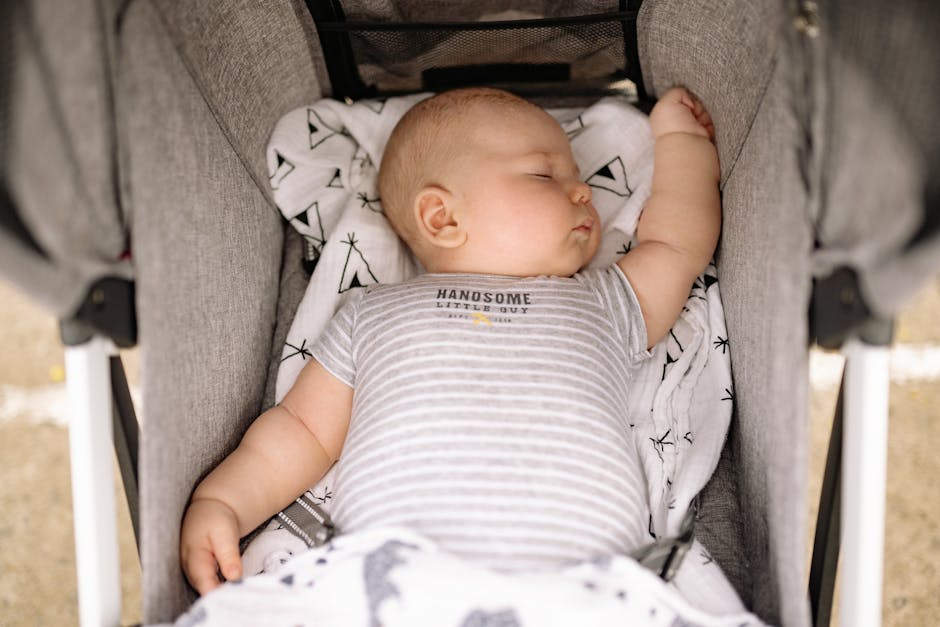
Photo: Yan Krukau / Pexels
Found this helpful? Share it!
Our team evaluates baby products for safety, usability, and value so you don't have to. Every recommendation is based on real research: customer reviews, expert opinions, and value for money. Learn more about us →
When choosing a stroller for newborns and toddlers, verify that it has a fully flat recline position for newborns (since their spine needs proper support) and can transition to an upright seat as your child grows, ensuring you get true multi-stage usability rather than just marketing claims. Additionally, check the weight and folding mechanism in person if possible, since a stroller that's difficult to collapse or too heavy to lift will quickly become impractical for daily use, especially when managing a newborn and toddler simultaneously.
The best stroller for newborns and toddlers is a convertible or multi-stage stroller that grows with your child from birth through the toddler years, such as models that feature a bassinet attachment for newborns and convert to a forward-facing seat for older babies. These versatile systems eliminate the need to purchase multiple strollers and provide the specialized support newborns require while offering the functionality toddlers need.
A convertible stroller designed for multiple stages offers the best value and functionality for families with newborns and toddlers. These strollers feature a reclined bassinet mode for newborns who need flat sleeping surfaces, then transition to forward-facing or parent-facing seats as your child grows. Look for models with adjustable harnesses, smooth suspension, and durable wheels that handle various terrain. Investing in one quality convertible stroller saves money and hassle compared to buying separate infant and toddler strollers.
When selecting a stroller that serves both newborns and toddlers, you need to understand the distinct requirements of each stage. Newborns require full recline capability—ideally a completely flat bassinet position—because their developing spine cannot safely sit upright for extended periods. The American Academy of Pediatrics recommends that newborns under 6 months spend minimal time in upright positions during sleep. Toddlers, conversely, benefit from higher seating positions that allow them to view their surroundings, engage with their environment, and interact with caregivers.
The best strollers bridge this gap through convertible designs. Key features to evaluate include: recline angles (full flat is essential for newborns), weight capacity (ensure it handles your toddler's current weight and future growth), wheel quality and suspension (important for smooth rides that support infant sleep), safety harnesses (5-point systems are standard), and maneuverability. Additionally, consider brake systems, storage capacity, and whether the stroller is compatible with your car seat, as this creates a complete travel system.
Stroller weight matters significantly when you're managing a newborn and toddler simultaneously. Lighter models (under 20 pounds) are easier to collapse and transport, while heavier strollers often provide more stability and features. The terrain where you'll primarily use the stroller also influences your choice—urban environments benefit from lightweight, compact designs, while parks and trails require sturdy suspension and larger wheels.
Pediatricians and child safety experts emphasize that the transition from reclined to upright seating should happen gradually as your baby's neck and spine develop strength. Most experts recommend maintaining flat or nearly-flat positions until at least 3-4 months old, when babies can better support their heads. Parenting specialists note that having one quality stroller that adapts to both stages reduces the decision fatigue many new parents experience and provides better value than purchasing separate strollers. Child development experts also highlight that toddlers benefit from stroller rides that keep them engaged—the ability to shift from bassinet to forward-facing positioning supports cognitive development by allowing exploration of their surroundings.
Convertible strollers solve the dual-stage challenge by incorporating both newborn-specific and toddler-specific features in a single frame. A quality convertible stroller includes a removable bassinet or fully reclinable seat that accommodates newborns, plus the ability to reposition to forward-facing or parent-facing modes for toddlers. Many models feature reversible seats, allowing you to maintain parent-facing comfort during newborn months while keeping your baby close, then switch to forward-facing as your toddler becomes curious about the world.
These strollers typically offer weather protection through extended canopies, secure har
As an Amazon Associate I earn from qualifying purchases.
← Back to All Reviews Shop on Amazon →A newborn stroller should have a fully reclined seat (flat position) to support the baby's developing spine, a sturdy frame that can handle the weight, and good suspension for a smooth ride. Look for models with adjustable handlebars, a large canopy for sun protection, and easy-to-use brakes for safety.
Yes, many convertible strollers are designed to grow with your child from newborn to toddler by offering multiple recline positions and switching between a bassinet and seat. This approach saves money compared to buying separate strollers, though you'll need to ensure it has proper newborn support and enough space for a growing child.
A travel system includes a stroller frame with a detachable infant car seat that clicks directly into the frame, allowing you to move your sleeping baby without waking them. A regular stroller requires you to transfer the baby separately, making travel systems more convenient for frequent trips but typically more expensive.
Quality strollers for newborns typically range from $300-$1,200 depending on features and brand, with good mid-range options available between $400-$700. Investing in a reputable brand with proper newborn support and durability is important since you'll use it daily for several years, but the most expensive option isn't always necessary.
| Retailer | Price Range | Shipping | Link |
|---|---|---|---|
| Amazon | Check Current Price | Free (Prime) | View on Amazon → |
| Walmart | Check Site | Free over $35 | Search → |
| Target | Check Site | Free over $35 | Search → |
Prices may vary. Click through to each retailer for current pricing.