By Best Baby Picks Daily • July 20, 2026 • Contains affiliate links
Affiliate Disclosure: As an Amazon Associate, we earn from qualifying purchases. Clicking our links costs you nothing extra and helps us keep reviewing products for free.
Summer heat often drives children indoors, where boredom can quickly derail developmental progress. Rather than defaulting to screen time, sensory toys offer a genuinely effective alternative—but the market includes several distinct categories, each with different strengths and limitations.
When choosing between these toy types for summer 2026, prioritize toys that can withstand outdoor conditions like UV exposure and moisture, since sensory toys and busy boards will likely spend more time outside during warmer months than during other seasons. Check that any electronic music toys have weatherproof ratings and consider open-ended sensory toys that require less battery replacement if you'll be using them frequently in gardens or at parks.
This guide compares the main types of sensory toys marketed for summer 2026: traditional Montessori manipulatives, busy boards (tactile learning boards with buttons, zippers, and latches), music toys for auditory exploration, and autism-friendly sensory options designed specifically for children with processing sensitivities. We'll walk through the real trade-offs of each so you can choose what actually fits your child's needs and your space constraints.
Traditional Montessori Sensory Manipulatives
These toys emphasize child-led exploration through self-correcting activities—think wooden blocks, stacking rings, and tactile sorting activities that align with Montessori pedagogy. They encourage independent problem-solving and fine motor skill development through open-ended play rather than predetermined "correct" outcomes.
Strength: support genuine cognitive development and sustained concentration. Weakness: often require more floor space and setup; less portable for travel or small apartments.
Best for: Parents committed to Montessori philosophy; children who benefit from unstructured, open-ended exploration; families with dedicated play spaces
Busy Boards (Tactile Learning Boards)
Purpose-built boards featuring zippers, buttons, snaps, latches, and textured surfaces designed to hold children's attention through repetitive tactile engagement. These are highly portable, wall-mountable, and require minimal floor space. They're marketed as calming activities for anxious children and provide extended periods of quiet engagement.
Strength: space-efficient, affordable, immediately engaging, and durable. Weakness: less developmentally substantive than open-ended Montessori toys; can become overstimulating for children with sensory sensitivities if not carefully designed.
Best for: Apartment dwellers; parents seeking portable, low-cost options; children who need fidgeting outlets; quick engagement during transitions
Music Toys & Auditory Sensory Tools
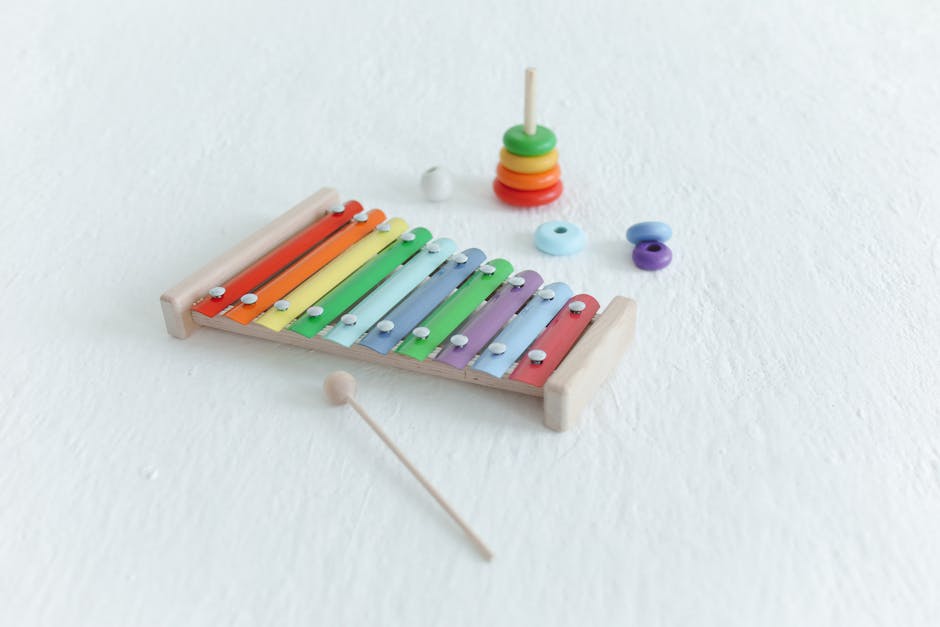
Toys that introduce rhythm, melody, and sound exploration—ranging from simple percussion instruments to more complex auditory learning devices. These support auditory processing, rhythm development, and creative expression while engaging a different sensory pathway than tactile toys.
Strength: activate different neural pathways; encourage creative self-expression; can be especially effective for children who are auditory learners. Weakness: can be overstimulating in small spaces; may frustrate noise-sensitive parents or siblings; less effective for children with auditory processing sensitivities.
Best for: Auditory learners; children who respond to rhythm and melody; families with sound-tolerant environments; children learning music fundamentals
Deliberately designed toys that avoid overstimulation while still engaging the senses meaningfully. These often feature reduced visual complexity, predictable tactile responses, calming textures, and elimination of sudden loud noises or jarring movements. Many brands (like those profiled in the source material) offer collections specifically calibrated for children with autism or sensory processing disorder.
Strength: designed specifically for children who struggle with traditional toys; reduce anxiety and meltdowns; support genuine developmental needs rather than just entertainment. Weakness: typically more expensive than generic busy boards; smaller product selection; require understanding of your child's specific sensory triggers to select appropriately.
Best for: Children with autism or sensory processing sensitivities; anxious or easily overwhelmed kids; parents seeking therapeutic, not just recreational, play tools
Multimodal Sensory Stations (Combined Approach)
Rather than choosing a single toy type, curating a dedicated sensory station that combines a busy board (tactile), a music toy (auditory), textured manipulatives (touch), and perhaps AAC (augmentative/alternative communication) devices for children who benefit from alternative communication methods. This approach is emphasized in summer-specific parenting guides as a way to prevent boredom and provide varied sensory input.
Strength: addresses multiple sensory pathways; prevents monotony; allows children to self-select based on momentary sensory needs. Weakness: higher cost; requires more space; more complex to set up and maintain; can become overwhelming if not thoughtfully curated.
Best for: Children with diverse sensory needs; families with space and budget for a dedicated play area; parents of multiple children with different sensory preferences
Pros & Cons
Pros
✓ Sensory toys demonstrably reduce summer screen time while supporting cognitive development during school breaks
✓ Diverse options allow matching to specific child needs: open-ended Montessori for thinkers, busy boards for fidgeters, music toys for auditory learners, autism-friendly designs for sensitive kids
✓ Busy boards and music toys are highly portable and space-efficient for apartments or travel
✓ Autism-friendly designs prevent overstimulation rather than creating it—important for children with processing sensitivities who suffer meltdowns with traditional toys
Cons
✗ No single toy type works for all children; matching the right option requires understanding your child's specific sensory and developmental profile
✗ Autism-friendly and specialty sensory toys carry premium pricing compared to generic busy boards
✗ Music toys can be overstimulating in noise-sensitive households or for children with auditory processing differences
✗ Open-ended Montessori manipulatives require more parental facilitation and space than self-contained busy boards
Our Verdict
The right sensory toy for summer 2026 depends entirely on your child's needs, your space, and your budget—not on any single brand being universally "best."
For space-constrained homes or travel: Start with a high-quality busy board. They're affordable ($20–$50), immediately engaging, and require minimal footprint. The tactile engagement keeps hands busy during hot afternoons without demanding parental setup.
For developmentally committed parents: Invest in open-ended Montessori manipulatives (blocks, sorting toys, stacking activities). These build genuine problem-solving and concentration in ways busy boards cannot, though they require more intentional space and slightly more parental guidance.
For auditory learners or musically inclined kids: Music toys round out a sensory diet and prevent monotony. But don't lead with music toys if your child already struggles with auditory processing or if noise is a household stressor.
For children with autism or sensory sensitivities: Autism-friendly sensory toys—not generic busy boards—are worth the premium price. They're engineered to avoid the overstimulation that makes sensory play counterproductive for these children. Generic toys marketed as "sensory" often fail this population.
For maximum engagement and developmental support: Combine approaches. Dedicate a cool, shaded play station with a busy board (portable fidgeting), a Montessori manipulative (cognitive challenge), and a music toy (auditory input). Let your child self-select based on what they need in the moment. This multimodal approach prevents boredom and provides the varied sensory input that actually supports neural development during long summers.
Frequently Asked Questions
What age group are Montessori sensory toys suitable for?
Montessori toys are marketed for infants through early elementary (roughly 6 months to 6 years), though specific products vary by developmental stage. Busy boards work well from 12 months onward; music toys from 6 months; autism-friendly designs adapt to individual sensory profiles regardless of age.
Are sensory toys actually better than outdoor play in summer?
No—but they're a necessary supplement when heat makes outdoor play unsafe or limited. Sensory toys shine during peak heat hours (10am–4pm) when kids must be indoors. Combining shaded outdoor play (early morning, late afternoon) with indoor sensory stations throughout the day is the realistic summer approach.
Are Montessori toys good for children with autism?
Montessori philosophy emphasizes self-directed, low-pressure learning, which can be excellent for autistic children—but generic Montessori toys aren't specifically engineered for sensory sensitivities. For children with autism, seek toys explicitly labeled as "autism-friendly" or "sensory-friendly," which address overstimulation and processing differences directly.
How do I know if a sensory toy will overstimulate my child?
Watch for meltdowns, covering ears, visual avoidance, or increased stimming after play. Overstimulation often comes from: sudden loud noises (music toys), too many visual elements competing at once, unpredictable tactile responses, or too much sensory input in a small timeframe. Autism-friendly designs minimize these triggers; generic busy boards may not.
What's the best way to set up a sensory station for summer?
Choose a cool, shaded area with good natural light (avoiding glare). Combine: one busy board (portable tactile engagement), one open-ended Montessori manipulative (cognitive challenge), optionally a music toy (auditory input), and AAC or communication devices if relevant. Rotate toys monthly to prevent boredom. Keep the station uncluttered—overstuffed sensory spaces become overstimulating.
Do sensory toys actually support communication development?
Indirectly. Play-based learning naturally encourages language development, narration, and social interaction. Some brands offer AAC (augmentative/alternative communication) devices that integrate into sensory play for children who benefit from alternative communication methods. But a busy board alone won't accelerate speech; it creates the safe, engaging context where language naturally develops.
How much should I spend on summer sensory toys?
Budget-conscious: $40–$80 for a quality busy board. Mid-range: $100–$200 for a busy board plus several Montessori manipulatives. Premium/specialized: $150–$300+ for autism-friendly curated sets or multimodal stations. One high-quality toy beats five cheap ones; children engage longer with durable, thoughtfully designed options.
Our team evaluates baby products for safety, usability, and value so you don't have to. Every recommendation is based on real research: customer reviews, expert opinions, and value for money. Learn more about us →
This post contains affiliate links. We may earn a commission if you purchase through our links at no extra cost to you.