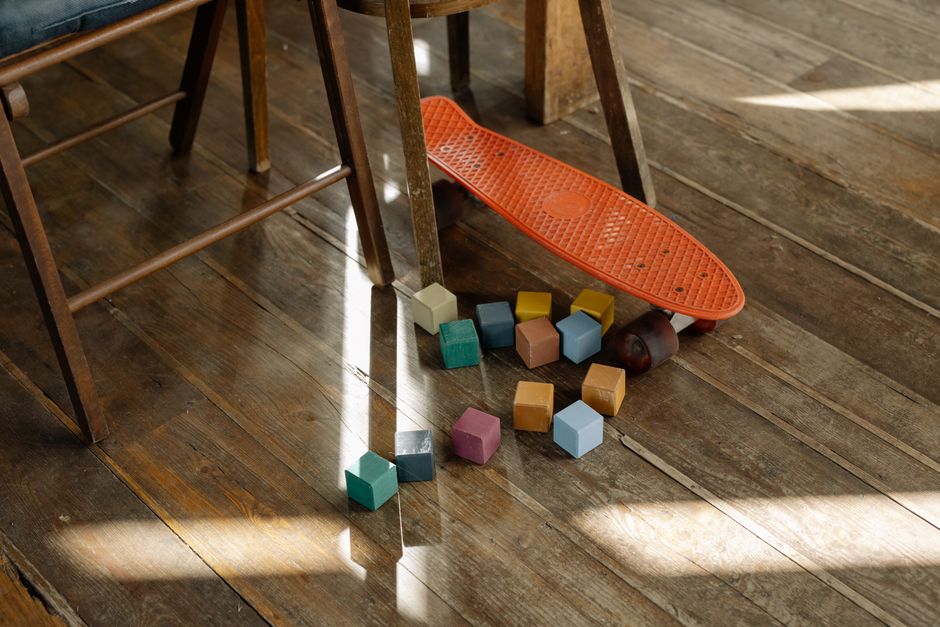
Photo: cottonbro studio / Pexels
When parents shop for toys, they're often choosing between two fundamentally different philosophies: structured, skill-targeted learning tools like busy boards, or open-ended traditional toys that have proven themselves over generations. The question isn't which is objectively "better"—it's which approach aligns with your child's developmental needs, learning style, and how you plan to use it.
Busy boards, rooted in Montessori principles, isolate specific skills like fine motor control, problem-solving, and cause-and-effect reasoning into single activities. Traditional toys—blocks, puzzles, dolls, vehicles—offer versatility and imaginative play, but require more parental scaffolding to unlock structured learning benefits. Both have measurable value; they simply work differently.
This guide breaks down what each category actually does, who benefits most, and how to decide whether you need one, both, or neither.
Busy boards are purpose-built learning devices featuring zippers, buttons, latches, locks, switches, and sensory textures arranged on a single board. Each element targets a specific skill: hand-eye coordination, bilateral coordination, problem-solving, and persistence. Montessori-designed busy boards emphasize self-directed exploration—children discover how things work without adult instruction, building confidence and independence.
Many modern busy boards, including autism-friendly variants, incorporate sensory regulation features. They provide structured input that can be both organizing and calming for children with sensory processing differences or attention regulation challenges.
Best for: Children aged 12 months–4 years; children with autism or sensory processing needs; parents seeking targeted skill-building with minimal setup; children who benefit from calm, repetitive, hands-on activities
Traditional construction toys develop spatial reasoning, planning, and fine motor skills through open-ended creation. Children decide what to build, how to build it, and iterate based on trial-and-error. These toys scale across age ranges—toddlers stack blocks; older children engineer structures with multiple pieces.
Construction play naturally encourages problem-solving and persistence, but learning benefits depend on play environment and parental engagement. A child stacking blocks alone learns differently than one building with a parent asking guiding questions.
Best for: Children aged 18 months–7+ years; children who thrive with open-ended creative play; families with multiple children across age ranges; parents able to engage in guided construction play
Puzzles and sorting toys (shape sorters, peg boards, matching games) target hand-eye coordination, spatial awareness, and cognitive categorization. Unlike busy boards, they isolate one specific skill per toy rather than combining multiple skills on one board. A shape sorter teaches spatial reasoning and motor control; a color-matching game teaches categorization.
These toys offer moderate structure—the activity is defined (fit the shape in the hole), but the learning progression is paced by the child. They're less sensorily rich than busy boards but more targeted than open-ended blocks.
Best for: Children aged 12 months–3 years; children learning specific cognitive skills like categorization; families with limited space for toy variety; children who need clear, repeatable activity structures
Dolls, action figures, play kitchens, and themed sets fuel imaginative and pretend play—a critical developmental domain that busy boards don't address. These toys encourage narrative thinking, social-emotional learning, role-playing, and language development through storytelling and interaction.
Imaginative toys require less structured design but more active parental or peer engagement to unlock full developmental benefits. A child playing alone with dolls engages differently than one playing cooperatively with peers or a parent.
Best for: Children aged 2 years–6+ years; children developing language and social skills; families prioritizing emotional and narrative development; children in group settings (preschool, siblings) who benefit from cooperative play
Sensory-focused toys emphasize tactile, auditory, and visual input without the skill-building structure of busy boards. Think crinkly books, shakers, textured objects, or discovery baskets filled with everyday safe items (wooden spoons, fabric scraps, plastic containers). They engage the senses and support regulatory needs without requiring problem-solving.
These toys are less structured than busy boards and more purely sensory than traditional toys. They're particularly valuable for very young infants and children with significant sensory seeking or calming needs.
Best for: Infants and toddlers under 18 months; children with high sensory needs or regulation challenges; parents seeking low-structure calming tools; children in early sensory exploration stages
There is no single winner—these tools serve different purposes. If your child is 12–36 months old, has autism or sensory regulation needs, or you have limited time for engaged play, a quality Montessori busy board delivers measurable, rapid skill development in fine motor control and problem-solving. The structured design and low setup burden make them genuinely useful in real family life.
If your child is 2+ years old and you can engage in guided play, traditional toys—especially construction sets and imaginative play items—develop broader developmental domains (creativity, language, social skills, spatial reasoning) that busy boards don't address. These are non-negotiable for healthy development.
The practical answer: most families benefit from both. A busy board (or two) handles structured fine motor and sensory learning; traditional toys handle imaginative play and social development. Busy boards are especially valuable if you have a child with special sensory or regulatory needs, or if you need independent play activities. Traditional toys are essential if you want to support language development, pretend play, and peer interaction.
The highest-ROI approach is choosing one quality busy board (rather than multiple similar ones), then investing in diverse traditional toys—blocks, puzzles, and dolls—that will hold your child's attention and developmental value across multiple years.
Research supports that structured, hands-on activities with isolated skill-building do accelerate mastery of specific fine motor and problem-solving abilities compared to unstructured play. A child practicing a zipper on a busy board will master zipping faster than through scattered practice. However, busy boards don't develop imaginative play, language, or social skills—domains where traditional toys excel. 'Faster' is skill-specific, not universal development.
Yes, many children with autism benefit significantly from busy boards, especially autism-friendly designs that provide calm, repetitive sensory input and clear, predictable activities. The structured nature, predictable cause-and-effect, and sensory regulation features address common needs. However, individual responses vary widely—some autistic children thrive with busy boards; others find them overstimulating or repetitively boring. Trial and observation matter more than generalizations.
Most busy boards are designed for 12 months to 3 years, though some work for up to age 4–5 depending on complexity. Interest drops significantly once a child masters all elements (often by age 3), unless new activities are rotated in. Traditional toys like blocks and dolls have longer useful lifespans—a quality block set works from 18 months through age 7+.
If you have time to actively engage with traditional toys through guided play, and your child doesn't have sensory regulation or attention challenges, yes. However, busy boards excel at creating independent, calm, focused play—valuable if you have limited time, multiple children, or a child who needs structured sensory input. They're efficient, not essential.
Montessori-designed busy boards typically cost $30–$80+ per unit. Traditional toys vary widely—blocks ($15–50), quality dolls ($15–60), play sets ($40–120). A single busy board is often pricier per unit than a single traditional toy, but busy boards deliver intense focused use in a shorter window, while traditional toys spread value across more years. Cost-per-use depends on your child's engagement and age range.
This post contains affiliate links. We may earn a commission if you purchase through our links at no extra cost to you.
← Back to Best Baby Picks Daily