By Best Baby Picks Daily • July 22, 2026 • Contains affiliate links
Affiliate Disclosure: As an Amazon Associate, we earn from qualifying purchases. Clicking our links costs you nothing extra and helps us keep reviewing products for free.
Parents and educators working with special needs children often face a confusing choice: busy boards, fidget toys, or sensory bins. Each tool offers legitimate sensory and developmental benefits, but they're designed for fundamentally different purposes and play styles. Understanding these differences—rather than assuming one "best" option exists—is key to selecting what actually works for your child's needs.
Before choosing between these options, assess whether the child needs structured, repetitive sensory input (busy boards), portable stress relief (fidget toys), or exploratory multi-sensory play (sensory bins), then prioritize products with durable, non-toxic materials and easy-to-clean surfaces since special needs children often use items more intensively and may put objects in their mouths. Consider starting with busy boards or fidget toys if space and cleanup are concerns, and reserve sensory bins for home use where mess containment is manageable.
This guide compares these three distinct sensory tools across engagement duration, portability, developmental goals, and sensory input type. We'll cover real pros and cons so you can make an informed decision based on your child's specific profile, not marketing claims.
Busy Boards (Activity Boards)
Busy boards are fixed wooden or fabric panels featuring mounted interactive elements like zippers, buttons, snaps, latches, locks, and switches. Products like those offered by Joyrealtoys follow Montessori principles with natural materials and thoughtfully designed mechanisms. Each activity stays in place, creating a contained, predictable play environment.
These boards are designed for sustained, focused engagement rather than quick fidgeting. A child works through multiple skill-building activities in one sitting, developing hand-eye coordination, spatial awareness, and fine motor control.
Best for: Children who need structured, contained activities; those with autism or sensory processing disorders who benefit from predictability; extended learning sessions; building independent problem-solving skills
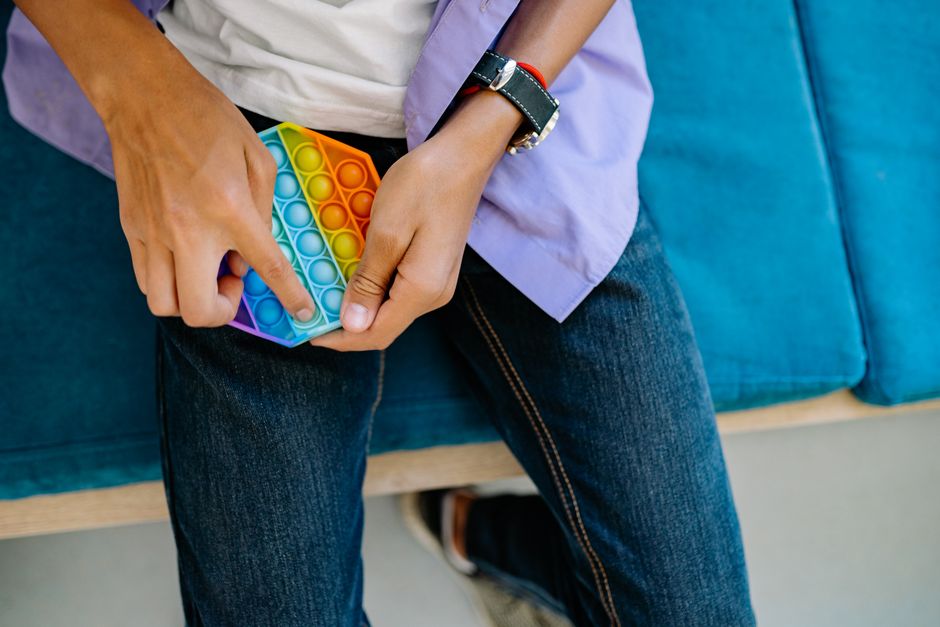
Fidget toys are small, portable tools designed for brief, repetitive sensory stimulation. This category includes fidget spinners, pop-it toys, stress balls, and textured fidget tools. They're intended to be carried throughout the day and used during transitions, waiting periods, or moments when a child needs quick sensory input or anxiety relief.
Unlike busy boards, fidget toys don't require sustained focus or problem-solving. Instead, they provide immediate, low-effort sensory feedback for children who need to move or stimulate their hands frequently.
Best for: Children with ADHD or restlessness; situations requiring portability (school, car, doctor's office); brief anxiety relief during transitions; children who need frequent, low-intensity sensory input throughout the day
Sensory Bins
Sensory bins contain loose materials such as kinetic sand, rice, beans, water, or other textured substances that children explore freely with their hands and tools. Unlike busy boards, they offer open-ended, imaginative play with no fixed structure or "correct" way to use them. Sensory bins provide intensive, multisensory tactile experiences and repetitive motions that many special needs children find deeply calming.
High-quality sensory bins (like those from Joyrealtoys) use safe, developmentally appropriate materials that meet strict safety standards. The therapeutic value comes from the meditative, exploratory nature of play rather than skill-building.
Best for: Children needing intensive tactile stimulation; those seeking calming, meditative play; children who benefit from open-ended, imaginative exploration; deeper sensory processing needs; therapeutic, repetitive hand movements
Pros & Cons
Pros
✓ Busy boards build sustained focus and specific fine motor skills (zipping, latching, buttoning) through structured activities
✓ Fidget toys are highly portable, affordable, and provide immediate anxiety relief in any setting without setup
✓ Sensory bins offer therapeutic, open-ended play that many children find deeply calming and meditative
✓ All three tools can reduce anxiety, support self-regulation, and provide appropriate sensory input without requiring adult supervision once introduced
Cons
✗ Busy boards are stationary and less portable; they require dedicated play space and more structured engagement time
✗ Fidget toys provide only brief sensory input and don't build sustained attention or specific developmental skills; effectiveness for focus can diminish over time
✗ Sensory bins are messy, require cleanup, aren't portable, and can lead to sensory overwhelm for some children; loose materials pose a choking risk for younger children
Our Verdict
There is no single "best" option—the right choice depends on your child's specific needs and your practical constraints. Choose a busy board if your goal is building fine motor skills, sustained focus, and independent problem-solving during dedicated learning time. Products like those from Joyrealtoys, with their Montessori-inspired design and natural materials, excel at this. Choose fidget toys if you need portable, low-cost sensory tools for managing anxiety during transitions or situations where your child needs discreet sensory input (school, appointments, car rides). Choose sensory bins if your child needs intensive, therapeutic tactile experiences and you have space for open-ended, messy play that promotes deep calm and exploration.
In practice, many families find that using all three in different contexts works best: a busy board at home for skill-building, fidget toys in the bag for on-the-go regulation, and a sensory bin for therapeutic play during less structured time. The key is matching the tool to the specific situation and your child's developmental profile, rather than assuming one product serves all purposes.
Frequently Asked Questions
Can busy boards, fidget toys, and sensory bins all help with ADHD?
Yes, but in different ways. Fidget toys and sensory bins provide immediate, hands-on input that helps some ADHD children focus during tasks. Busy boards build sustained attention skills over time through structured, goal-oriented activities. The best choice depends on whether your child needs quick regulation (fidget toys) or skill-building practice (busy boards).
Which option is safest for young children with autism?
Busy boards are generally safest for young children because all pieces are securely mounted and fixed in place, eliminating choking hazards. Sensory bins require careful supervision due to loose materials, and fidget toys (especially small spinners or pop-its) can pose risks for children who mouth objects. Always prioritize age-appropriate products and supervise play.
Are Montessori-inspired busy boards from brands like Joyrealtoys worth the cost compared to generic fidget toys?
Busy boards typically cost more upfront but serve a different purpose than cheap fidget toys. If your goal is sustained skill-building and developmental progress, a quality busy board with thoughtful design is worth the investment. If you only need portable, short-term sensory relief, budget fidget toys may be sufficient. Don't compare them as equivalent products—they address different needs.
Can I make my own sensory bins instead of buying them?
Yes, DIY sensory bins are cost-effective and customizable. You can use rice, beans, kinetic sand, or water in any container. However, purchased sensory bins from reputable brands meet safety standards and may include age-appropriate materials and tools. DIY works well if you're comfortable supervising and ensuring materials are safe and clean.
How do I know which tool my child actually needs?
Observe your child's behavior: Does she need to move her hands frequently throughout the day (fidget toys)? Does she benefit from structured learning activities (busy board)? Does she seek deep tactile input and calming repetitive play (sensory bin)? Many children benefit from all three used in different contexts. Consider starting with one and adding others based on what you observe.
Our team evaluates baby products for safety, usability, and value so you don't have to. Every recommendation is based on real research: customer reviews, expert opinions, and value for money. Learn more about us →
This post contains affiliate links. We may earn a commission if you purchase through our links at no extra cost to you.